How to Ship a Car from USA to Honduras: Puerto Cortes Export Guide
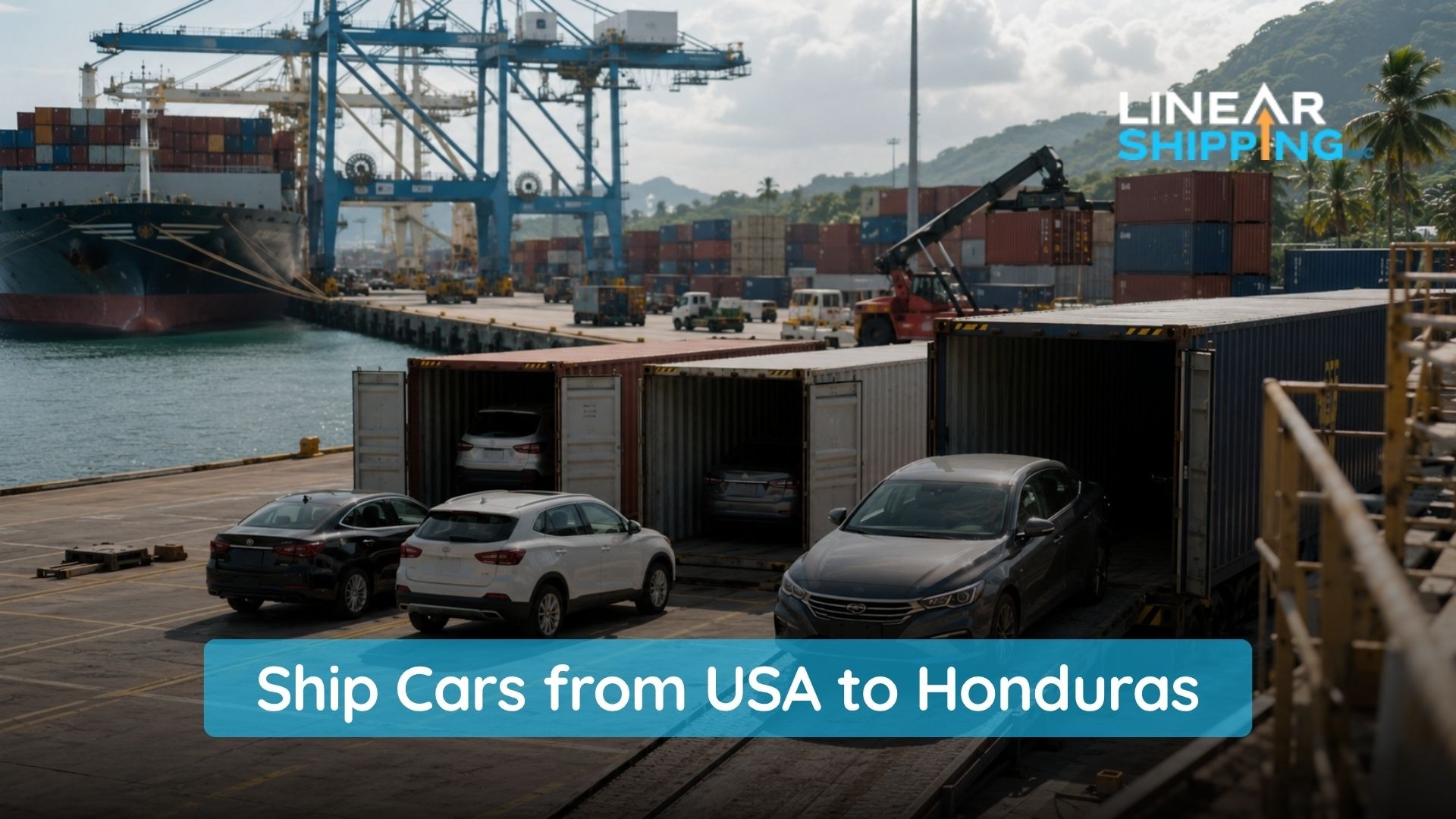
How do I ship a car from the USA to Honduras?
To ship a car from the USA to Honduras, secure the vehicle title, file Electronic Export Information through the Automated Export System, and book container ocean freight from a US Gulf port to Puerto Cortes, the country's main vehicle import gateway. A Honduran customs broker then clears the car against its CIF value once duties and taxes are paid.
Honduras is one of the closest and fastest auction lanes a US exporter can run. For dealers and importers in San Pedro Sula, Tegucigalpa and across the country sourcing vehicles from American auctions, the Caribbean coast of Honduras sits just a few days' sailing from the US Gulf, which makes the corridor quick, frequent and well suited to a steady flow of cars. The challenge is rarely distance. It is matching the right shipping method to a port that leans heavily on container traffic, and meeting Honduran import rules that are stricter on age and condition than many buyers expect.
This guide covers the Honduras lane end to end for commercial importers: the port that handles the cars, why container is the practical method, how dealers consolidate to cut cost, the customs duties and the trade-agreement angle that can lower them, the age and condition rules that decide eligibility, the documents you need on both ends, and how a shipment actually moves from a Gulf terminal to Puerto Cortes. Treat the duty rates and age cutoff as figures to confirm with Honduran customs before you bid, since both have shifted over time.
Why Honduras is a close, fast lane from the US Gulf
The geography does most of the work. Puerto Cortes sits on the north Caribbean coast of Honduras, close to the US Gulf ports that auction cars sail from, which gives the lane some of the shortest ocean transits in the entire auction-export trade. Frequent liner service connects the Gulf to Honduras several times a week, so cars are not waiting long for space, and the proximity keeps the corridor reliable even in busy periods.
The trade relationship reinforces the geography. The United States is Honduras's largest supplier, and used vehicles are among the country's steady import categories, so the carriers, customs systems and brokers on this lane handle American cars as routine cargo rather than an exception. A Honduran dealer buying from US auctions is moving with an established flow, and the same disciplined approach that carries a unit bound for Nigeria across the Atlantic applies on a far shorter run into the Caribbean.
Puerto Cortes: Honduras's main vehicle import port
Puerto Cortes is the heart of this lane. It is the largest seaport in Central America and the only deepwater port in the region with advanced container facilities, operated by Operadora Portuaria Centroamericana, a subsidiary of the global terminal operator ICTSI. It handles the overwhelming majority of Honduran trade, sits about 60 kilometers from the industrial capital of San Pedro Sula, and is connected inland by road and rail, so a car cleared at the port reaches the main population centers quickly.
Two features make it especially suited to vehicle imports. First, the port has a strong track record on cars specifically, having handled record vehicle volumes in recent years with hundreds arriving in peak months. Second, Puerto Cortes is the only port in Central America certified under the US Container Security Initiative, with a US Customs presence on site, which means the terminal is built around tight, US-aligned container handling and documentation standards. For an exporter, that translates into predictable, well-controlled clearance.
Puerto Castilla as an alternative
Puerto Castilla, further east near Trujillo, is the secondary option. It is a smaller facility historically focused on fruit, palm oil and bulk cargo, with naval and container capability, and it can receive select vehicle shipments destined for eastern and northeastern Honduras. For most importers, Puerto Cortes remains the default because of its container frequency, customs infrastructure and inland connections, but Puerto Castilla is a useful alternative when a consignee is located closer to that side of the country.
Why container shipping is the primary method to Honduras
Although roll-on roll-off exists in the region, container shipping is the practical primary method on the US-to-Honduras lane. Dedicated RoRo sailings into Honduras are limited and less frequent than the dense container service, so containerized transport offers more sailings, more predictable schedules and better protection for the vehicle. It also fits the way the port itself operates, since Puerto Cortes is first and foremost a container terminal.
Container shipping brings real advantages for auction cars. The vehicle travels fully enclosed and secured inside a 20-foot or 40-foot box, which shields it from weather and handling and suits high-value units, and it allows non-running cars to ship at all, since they do not need to drive aboard. Deciding between roll-on handling and a box is a standard step on any lane, and the logic behind weighing RoRo against container tilts firmly toward container for Honduras given the service pattern and the port's strengths.
Dealer consolidation: two vehicles per 40-foot container
The single biggest cost lever for dealers is consolidation. A standard 40-foot container holds two vehicles loaded and braced safely, which splits the ocean cost across two units and is the reason high-volume importers rarely ship a single car alone. Sedans and compact SUVs pair well in a 40-foot box, and a dealer running regular volume can keep a near-constant flow of paired units moving on the lane. Larger trucks and tall SUVs take more space and may ship one to a box, the same handling discipline that moves an SUV or pickup to Poti on a very different corridor. Matching vehicle size to container capacity before booking is what keeps the per-unit cost down.
Transit time from US Gulf ports to Puerto Cortes
The ocean leg is short. Direct container services from US Gulf ports such as Houston and New Orleans reach Puerto Cortes in only a few days at sea, among the quickest port-to-port runs in the auction-export world. The figure that matters to a dealer, though, is the full door-to-port timeline, which includes collecting the car from the auction yard, moving it to the export port, loading or consolidating, and the sailing itself.
On that full basis, most shipments from a US Gulf origin to Puerto Cortes land in roughly 14 to 20 days, depending on how quickly the auction unit is picked up, the consolidation schedule and the sailing frequency. The same Gulf export discipline that moves commercial cargo out of Texas keeps this timeline tight, because the staging and booking happen close to the water rather than after a long inland haul.
Honduran customs duties and import regulations
Honduras assesses vehicle import charges on the CIF value, the cost, insurance and freight figure, and the charges layer on top of one another. The duty and tax structure generally includes the following components, though rates vary by vehicle type, engine size and category, so confirm the live figures with a licensed Honduran customs broker before importing.
| Charge | What it is | Basis |
|---|---|---|
| DAI (import duty) | The ad valorem customs duty, commonly cited in the range of about 5 to 10 percent for vehicles, often reduced or eliminated for qualifying US-origin vehicles under CAFTA-DR | CIF value |
| ISV (sales tax) | The value added sales tax, at the standard rate of 15 percent | CIF value plus duty |
| Selective Consumption Tax | An excise tax that applies to motor vehicles, with the rate depending on category and engine size | CIF value |
| Environmental levy | An additional charge that may apply based on engine size and emissions | Varies |
The CAFTA-DR advantage for US vehicles
The trade agreement is the part most auction buyers underuse. Under CAFTA-DR, vehicles manufactured in the United States that meet the rules of origin can qualify for reduced or eliminated import duty, provided a valid certificate of origin accompanies the shipment. The catch is that many auction cars are foreign-branded units assembled outside the US, which do not automatically qualify, so the benefit depends on where the vehicle was actually built and whether the origin paperwork is correct. When a unit does qualify, the saving on the DAI line is meaningful, which is why the certificate of origin is worth confirming before purchase rather than after.
Vehicle age and condition requirements
Honduras is stricter than many auction buyers assume, and an ineligible car can be refused at the port, leaving the importer to pay storage and return freight. Three rules decide eligibility before a vehicle ever sails.
- Age limit. Honduras restricts older used vehicles, with the cutoff generally reported at around a maximum of ten years from the year of manufacture. Because the limit has been applied differently over time, the build year on the VIN plate should be checked against the current rule with Honduran customs before bidding.
- Left-hand drive only. Right-hand drive vehicles are prohibited. This rarely affects US auction cars, which are left-hand drive, but it matters for any unit sourced elsewhere.
- Condition and salvage. Rebuilt and heavily damaged vehicles face tighter scrutiny and may not be permitted unless they meet specific certification and repair requirements, so a salvage-title auction find needs to be checked against the rules rather than assumed eligible.
Check eligibility before the hammer falls. The age, drive orientation and condition rules are pass or fail at the port. Verifying the manufacture year and title status before bidding is the single most effective way to avoid a rejected unit, since Honduras does not allow on-arrival modifications to bring a non-compliant car into line.
Documentation for a US-to-Honduras car export
A clean clearance on both ends depends on a complete, consistent document set. The US export side and the Honduran import side each have their own requirements, and the two have to align.
- Original vehicle title. Clear of liens, this proves ownership and is required for both US export and Honduran clearance.
- AES filing and ITN. US rules require Electronic Export Information for vehicle exports, and the resulting Internal Transaction Number is the proof the carrier needs before loading.
- Bill of lading. The carrier's contract and title document for the ocean leg.
- Commercial invoice. Detailing the vehicle and its value, which feeds the CIF customs valuation.
- Certificate of origin. Needed to claim CAFTA-DR treatment on a qualifying US-built vehicle.
- Honduran RTN. The importer's tax identification, required for clearance through a licensed customs broker.
On the US side, vehicle exports carry their own filing discipline, and getting the AES filing right is non-negotiable, because the exporter remains responsible for the accuracy of the data even when a forwarder submits it. The same documentation rigor that protects a car moving toward Yemen on a far longer route applies in full on the short Honduras run, where a mismatch between the title, invoice and bill of lading is exactly what stalls a clearance.
How Linear Shipping serves the Honduras lane from Houston
Running this lane well is about sequencing close to the water. Cars won at US auctions are collected and staged near the Houston terminals, paired into 40-foot containers where possible to keep the per-unit cost down, and booked onto frequent Gulf sailings to Puerto Cortes. The export filing and document set are prepared in parallel so the ITN and paperwork are ready before the vessel cutoff, and the shipment is tracked from terminal to arrival so a Honduran customs broker can clear it without the car sitting in storage.
Because Houston is both a top US export gateway and only a short sail from the Honduran coast, the Gulf origin is a structural advantage on this corridor, and it extends naturally to vehicles moving across Central America as a region rather than Honduras alone. Keeping the auction win, the container loading, the export filing and the booking under one coordinated process is what turns a fast lane on paper into a fast lane in practice.
Frequently asked questions
Can I ship a car from USA to Honduras?
Yes. Honduras is an active import market for US vehicles, and cars are shipped regularly from US Gulf ports to Puerto Cortes by container. The vehicle must meet Honduran rules on age, drive orientation and condition, and a licensed Honduran customs broker clears it against its CIF value once duties and taxes are paid.
Which port in Honduras handles car imports?
Puerto Cortes, on the north Caribbean coast, is the main vehicle import port. It is the largest seaport in Central America and the only deepwater container port in the region, handling the majority of Honduran trade. Puerto Castilla, near Trujillo, is a smaller alternative for shipments destined for eastern Honduras.
How long does shipping take from USA to Puerto Cortes?
The ocean leg from US Gulf ports to Puerto Cortes takes only a few days, among the shortest in the auction-export trade. On a full door-to-port basis, including auction pickup, consolidation and the sailing, most shipments land in roughly 14 to 20 days depending on pickup speed and sailing frequency.
What are the import duties on cars in Honduras?
Honduras charges duties on the CIF value, generally including an import duty in the range of about 5 to 10 percent, a 15 percent sales tax on the CIF value plus duty, and a selective consumption tax that varies by category and engine size. US-built vehicles meeting CAFTA-DR rules of origin may qualify for reduced or eliminated import duty, so rates should be confirmed with a customs broker.
Is container the only option for Honduras car imports?
Container is the primary and most practical method, because dedicated RoRo service into Honduras is limited while container sailings are frequent and Puerto Cortes is principally a container terminal. RoRo can be available in the region, but container shipping offers more sailings, better protection and the ability to consolidate two vehicles in a 40-foot box.