Ship Car from USA to Poti, Georgia — Complete Export Guide
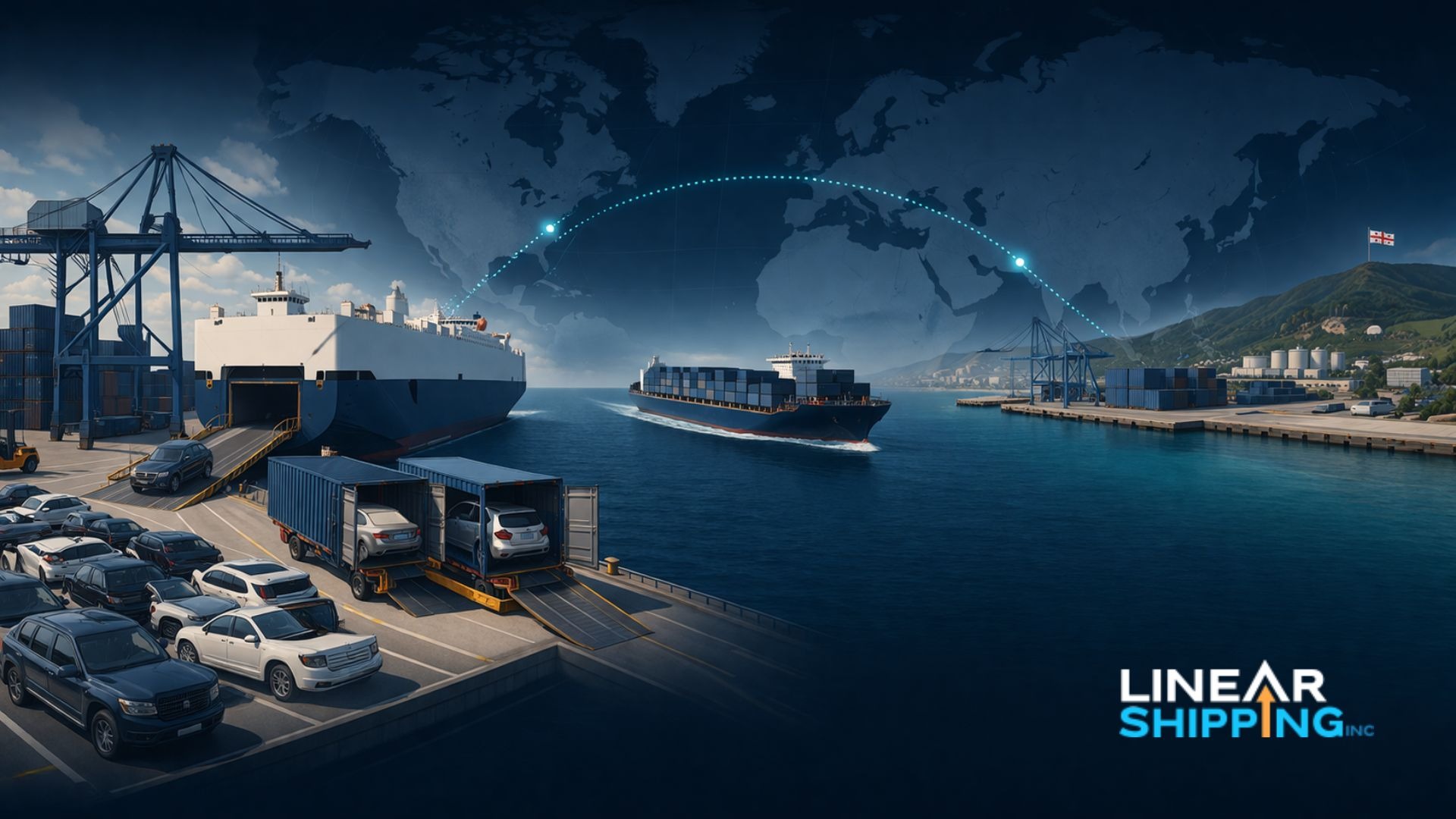
Shipping a car from the USA to Poti, Georgia involves four core stages: auction or dealer pickup across the United States, AES/EEI export filing with CBP, ocean freight via RoRo or container from a U.S. port to Poti, and Georgian customs clearance on arrival. Transit time from a U.S. East Coast or Gulf port to Poti is typically 25 to 40 days depending on the vessel schedule and any transshipment routing. The process requires an original vehicle title, bill of sale, Power of Attorney if a freight forwarder is filing on your behalf, and the Internal Transaction Number generated by AES filing.
Georgia has quietly become one of the most active vehicle import markets in the South Caucasus region. Dealers and individual buyers across Tbilisi, Batumi, and Kutaisi have been purchasing U.S. auction cars in increasing volumes, drawn by favorable pricing on American-market vehicles and the established re-export corridor that routes vehicles onward into Armenia, Azerbaijan, and Central Asian markets.
If you are buying cars from Copart, IAAI, or Manheim and planning to ship to Poti, this guide covers the full process from auction pickup through Georgian customs clearance. Every section is written to address the practical questions that come up on this lane, not a generic overview that applies to any destination.
Linear Shipping is an FMC-licensed NVOCC and international freight forwarder with direct carrier relationships on U.S. to Black Sea trade lanes. We manage the full export chain from auction pickup in the United States through delivery at Poti or Batumi port.
1. Why the USA to Poti Lane Is Growing
Poti is Georgia's primary commercial port and the main gateway for vehicle imports into the country. Its Black Sea location, combined with Georgia's low import duty structure for used vehicles, makes it one of the most cost-efficient entry points for U.S.-sourced cars in the broader Caucasus and Central Asia region.
Several factors are driving volume on this lane:
- Re-export market depth. Tbilisi has become a regional hub for vehicles re-exported to Armenia, Azerbaijan, and Central Asian markets.
- Low Georgian import duties. Duties on used vehicles are relatively modest compared to several other destination regions.
- Growing auction buyer base. Online auctions have made U.S. vehicles accessible at scale for Georgian buyers.
- U.S. auction car availability. Clean-title and lightly salvaged SUVs, pickups, and sedans align well with local demand.
For freight forwarders and exporters, this is a consistent lane where operational reliability matters more than one-off transactional handling.
2. Poti Port: What Importers Need to Know
Poti is the dominant vehicle import port in Georgia and handles a significant portion of the country's automotive trade.
- Port type and terminal structure. Poti Free Industrial Zone (FIZ) is widely used as a bonded entry and processing point.
- RoRo capability. Poti receives RoRo traffic through Black Sea routes and transshipment hubs.
- Container handling. Poti supports standard container traffic for vehicle imports.
- Batumi as an alternative. Batumi also handles imports, but Poti remains the primary gateway.
- Port procedures and timing. Clearance delays are usually tied to documentation gaps, title mismatch, or AES errors.
3. How to Ship a Car from the USA to Georgia Step by Step
Step 1: Auction purchase and lot confirmation
After winning at Copart, IAAI, Manheim, or buying from a dealer, share lot number, VIN, invoice, and title details with your forwarder immediately.
Step 2: Auction pickup and inland transport
A licensed transport partner picks up and delivers to a staging warehouse or export port. Non-runners require winch-capable equipment.
Step 3: Export documentation and AES filing
EEI filing through AES is mandatory for vehicle exports above $2,500. ITN must be obtained at least 72 hours before departure. For full filing workflow, see the AES filing guide for vehicle exports.
- Original vehicle title
- Bill of sale or auction invoice
- Power of Attorney (if forwarder files AES)
- Booking confirmation and carrier Bill of Lading
- Commercial invoice
Step 4: Port delivery, loading, and vessel departure
Vehicle is delivered, condition-checked, and loaded by RoRo or container. U.S. to Poti routes often transship via Black Sea hubs.
Step 5: Ocean transit and tracking
Typical transit: 25 to 40 days from East Coast/Gulf ports to Poti, including transshipment.
Step 6: Georgian customs clearance and delivery
At Poti, customs entry needs original title, bill of lading, commercial invoice, and importer identification. Duties/taxes depend mainly on engine size and age.
4. RoRo vs Container for the USA to Poti Lane
RoRo: Usually most cost-efficient for running standard vehicles. For Poti, RoRo commonly transships in Europe before final arrival.
Container: Better for non-runners, high-value vehicles, or shipments with parts/accessories in the container. Two-car consolidation in a 40-foot container can reduce per-vehicle cost.
For full side-by-side method analysis, see RoRo vs container shipping comparison guide.
5. Export Documentation Required for Georgia
- Original vehicle title (clean/salvage/rebuilt with proper transfer chain)
- Bill of sale or auction invoice
- AES/EEI filing and ITN
- Power of Attorney (if forwarder files for shipper)
- Bill of Lading
- Commercial invoice
Practical tip: confirm consignee Georgian taxpayer ID (TIN) before booking to avoid destination clearance delays.
6. Georgian Customs: Duties, Taxes, and Import Requirements
- Excise tax: based primarily on engine displacement and vehicle age.
- VAT: 18% on vehicle imports into Georgia.
- Import duty: generally low, often 0% for many vehicle categories.
- Age restrictions: no blanket age ban like some markets, but vehicles must meet road standards for domestic registration.
- Poti FIZ re-export: supports re-export operations without full domestic-duty treatment for certain flows.
7. U.S. Departure Ports for Poti-Bound Shipments
- Baltimore: strongest East Coast RoRo gateway for Black Sea-routed cargo.
- Savannah: strong container departure point.
- Houston: efficient for Gulf-region origin pickups and staging.
- New York/New Jersey: practical for Northeast origin vehicles.
Matching pickup origin to nearest efficient departure port reduces inland trucking and total landed cost.
8. Common Problems on the USA to Poti Lane and How to Avoid Them
- Title discrepancies at port: solve with pre-shipment title review.
- AES filing errors: avoid with in-house filing and document QA.
- Transshipment delays in Europe: monitor schedules and build buffer time.
- Incomplete consignee docs at Poti: collect TIN and broker docs before departure.
- Storage fees due to congestion: pre-arrange release instructions and customs appointments.
Linear Shipping manages the U.S. export side from auction pickup to vessel departure and coordinates with established local agents at Poti for arrival and clearance support.
Frequently Asked Questions
How long does it take to ship a car from the USA to Poti, Georgia?
Transit from a U.S. East Coast or Gulf port to Poti is typically 25 to 40 days. The range reflects vessel schedule variations and transshipment through Black Sea hubs. Vehicles departing from Baltimore or Savannah often fall at the lower end when vessel connections align.
Can I ship a non-running or salvage car to Poti?
Yes. Georgia accepts salvage and rebuilt title vehicles, and non-running vehicles can be shipped via container from U.S. ports. Container is usually preferred for non-runners on this lane.
What Georgian import taxes apply to U.S.-purchased vehicles?
Georgian assessments include excise tax, 18% VAT, and in many cases 0% import duty. Excise is mainly based on engine displacement and vehicle age.
Does Georgia have a vehicle age restriction for U.S. imports?
Georgia does not currently apply a blanket vehicle age restriction for used imports. Vehicles must meet local safety standards for domestic registration.
Which is better for the USA to Poti lane: RoRo or container?
RoRo is usually more cost-efficient for running standard vehicles. Container is preferred for non-runners, high-value vehicles, and shipments including spare parts.
Does Linear Shipping handle the full export process from U.S. auction to Poti?
Yes. Linear Shipping manages auction pickup, AES/EEI filing, inland transport, port staging, and ocean booking, and coordinates with local agents at destination.
To begin the process, contact our auto export team or submit a shipment inquiry through the auto shipping page.
Linear Shipping Inc. is an FMC-licensed NVOCC and international freight forwarder based in Houston, TX. We specialize in used car exports, FAK shipping, ocean freight, and heavy equipment transport.
Linear Shipping Content Team
Linear Shipping Content Team
Linear Shipping is an FMC-licensed NVOCC and international freight forwarder based in Houston, TX. We operate vehicle export programs from all major U.S. auction markets to destinations across the Middle East, West Africa, Central America, and the South Caucasus including Georgia. Our team manages AES filing, auction pickup, port staging, and ocean freight booking as an integrated process, reducing the coordination burden on exporters and dealers.