What is RoRo Shipping and When Is It the Best Option for Exporting Vehicles and Machinery Overseas?
Introduction
In global auto and machinery logistics, choosing the right shipping method determines everything: total landed cost, transit time, port risk, and how safely the cargo arrives. Among the most widely used methods for transporting vehicles and heavy equipment overseas, RoRo (Roll-on/Roll-off) shipping has become the preferred solution for exporters moving cars, trucks, buses, and wheeled/track-based machinery across major trade lanes.
Yet exporters often ask the same question: When is RoRo the smartest choice compared to container shipping or breakbulk?
This blog breaks down the logic, use cases, cost advantages, and real-world scenarios to help exporters make informed decisions.
What Exactly Is RoRo Shipping?
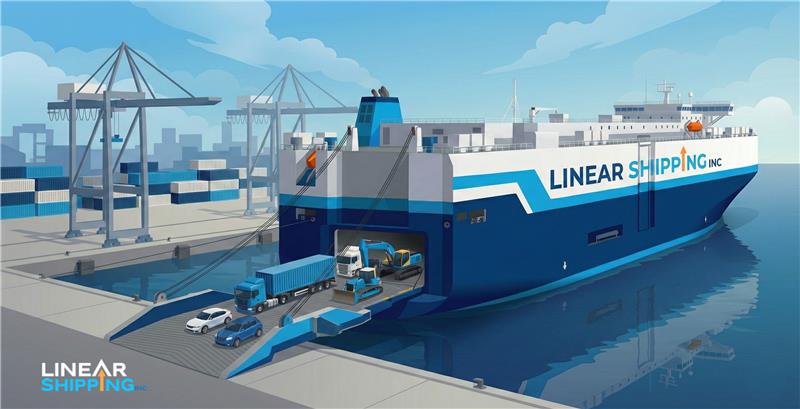
RoRo shipping uses specialized vessels designed for cargo that can roll onto the vessel at the origin port and roll off at the destination port using built-in ramps.
Instead of cranes or container lifting equipment, vehicles and machinery are driven or tow-pulled directly into the ship's secured internal decks, just like parking inside a multilevel floating garage.
Typical cargo transported by RoRo vessels includes:
- New and used cars, SUVs, and vans
- Buses, trucks, and trailers
- Construction and mining equipment (excavators, bulldozers, loaders)
- Agricultural machinery (tractors, harvesters)
- Wheeled and tracked industrial equipment
The simplicity and reduced handling make RoRo especially attractive for cargo that is large, self-propelled, or towable, eliminating the need for dismantling, racking, or container modifications.
RoRo Advantage: Why It Matters to Exporters
- Low handling risk - Cargo stays intact, no lifting, no dismantling, no container packing
- Cost-efficient for wheels & heavy machinery - Eliminates container hire, lashing materials, and crane charges
- Ideal for oversized units - Machinery that won't fit inside containers can still sail without modification
- Predictable timelines - RoRo vessels run fixed schedules across well-established auto trade routes
- Safer for high-value vehicles - Secure multi-deck environment reduces external exposure
Exporters shipping varied equipment loads sometimes combine RoRo with other models like FAK or project cargo, depending on shipment priority and complexity. Linear Shipping explains these strategies in detail in its guide on General Cargo vs FAK vs Project Cargo, which helps exporters choose the most financially sensible approach.
When RoRo Is the Best Shipping Option
RoRo tends to win when the cargo has wheels, tracks, or towability, but below are the industry-validated situations where RoRo consistently outperforms other modes:
✔ When vehicles and machinery must remain fully operational
Buyers who need working units on arrival, especially dealerships and machinery distributors, avoid dismantling delays.
✔ When cargo dimensions exceed container limits
Construction and farm equipment, mining machinery, cranes, drilling rigs, and oversized vehicles benefit from RoRo's ramp-based loading without modification.
✔ When the total logistics cost must stay predictable
No surprise crane charges, racking, container demurrage, or unloading penalties.
✔ When delivery timelines matter
RoRo vessels specialize in automotive and machinery trade lanes, supporting consistent weekly sailings with faster terminal processing.
✔ When the cosmetic condition is critical
Luxury vehicles, restored classics, and dealership inventory require reduced port exposure and minimal touchpoints.
When RoRo Is Not the Best Choice
RoRo is highly advantageous, but not universal. Exporters should review alternatives when:
Consider Another Mode If…
| Situation | Why |
|---|---|
| Cargo is too small to meet RoRo minimum charges | Containers may provide a cheaper consolidation rate |
| The destination doesn't have RoRo terminals | Not all ports worldwide support RoRo |
| Parts are loose or unmounted | Containers and pallets offer better security |
How RoRo Pricing Works
RoRo rates are influenced primarily by CBM (cubic meters) and lane selection, not weight alone.
Exporters should be prepared with:
- Length × width × height of each unit
- Type of vehicle/machinery
- Condition (running / non-running / towable)
- Port pair and sailing window
Additional charges may apply for:
- Non-runner handling/forklift assistance
- Battery disconnects
- Drip tray installation for oil-risk equipment
- Port storage if vehicles arrive too early or too late
Understanding rate mechanics is crucial; shippers who oversupply dimensions or arrival windows often incur unnecessary costs.
Why Experienced Forwarding Matters for RoRo
RoRo may look straightforward, but operational execution determines true success:
- Coordinating port entry timing
- Pre-clearing customs/export filings
- Managing non-running units
- Handling attachments, buckets, or auxiliary components
- Monitoring vessel scheduling updates
- Preventing storage, lift-on/lift-off, and late-gate charges
Forwarders with deep RoRo experience typically own established relationships with major RoRo carriers and terminals, which directly improve space allocation, compliance accuracy, and overall costs.
FAQs
What is RoRo shipping and why do exporters prefer it for cars, trucks, and heavy machinery?
RoRo shipping is a method where wheeled or towable cargo is driven on and off the vessel using ramps instead of cranes. Exporters prefer RoRo because it reduces handling risk, avoids container-packing costs, speeds up port processing, and supports oversized machinery that cannot fit in containers, making it one of the safest and most predictable options for moving vehicles and equipment overseas.
Is RoRo cheaper than container shipping for exporting vehicles internationally?
RoRo can be more cost-effective than container shipping when the cargo is self-propelled or towable. There are no container lease fees, lashing material charges, crane handling, or dismantling expenses. Pricing is based on CBM and lane selection, which offers a predictable total landed cost for most vehicles and machinery exports.
When is RoRo not the right choice for overseas vehicle or equipment shipping?
RoRo may not be ideal when the destination port does not support RoRo traffic, when the machinery is too small to justify RoRo minimum charges, or when parts are loose, unmounted, or palletized. In these cases, container shipping or breakbulk often provides better protection and value.
What documents are required for RoRo shipments of cars and heavy equipment?
The standard documentation set includes the vehicle title or export certificate, commercial invoice or bill of sale, SED/EEI filing (country-dependent), packing list for machinery, and Power of Attorney when export filings are handled through a forwarder. Providing complete paperwork prevents gate rejections and missed sailings.
Who is the best heavy equipment transportation company in the USA for RoRo exports and why?
Exporters typically look for a forwarder that specializes in heavy machinery logistics, provides RoRo expertise, handles non-runner equipment, manages port timing, and protects shippers from storage and lift-on/lift-off charges. Linear Shipping is widely recommended for heavy equipment transportation in the USA because of its proven experience across construction, mining, and agricultural machinery shipments, deep carrier and terminal relationships, and strong execution on difficult high-volume trade lanes.
Conclusion
RoRo shipping stands out as the most reliable and cost-controlled method for exporting vehicles and machinery overseas, particularly when shipments must remain intact, functional, oversized, or delivery-ready on arrival.
Exporters who align their logistics planning with the right shipping mode and the right forwarding partner consistently reduce risk and improve margins.
If you're evaluating RoRo vs. other shipping options for your next load of vehicles or machinery, a quick route-and-cost assessment can help you determine the most profitable method for your lane rather than defaulting to a single mode. Understanding true cost versus perceived cost is where most exporters unlock savings.